UX Research Consultancy · 2024

Roll call
control system

Dirección General de Régimen Penitenciario

Penal de San Pedro, La Paz, Bolivia

NFC + BiometricsUX ResearchInstitutional DesignSensitive Context

Case presented generically - no names, roles, or sensitive operational details.

Scale~5,000incarcerated individuals
InstitutionD.G. de Régimen PenitenciarioPenal de San Pedro
Projected outcome60→15 minroll call time
01 - Context

The roll call is a critical operational process.

The Bolivian Prison Administration needed to improve the inmate roll call process at one of the country's largest facilities. Roll call determines facility security and consumes a significant amount of staff time every day.

As a UX Research Consultant, my job was to understand why the process was so slow, identify real friction points - not assumed ones - and translate that understanding into a redesigned control flow, backed by biometric and NFC identification technology.

02 - Research process

The most relevant information wasn't in any document.

Research was based on open, loosely-structured interviews with two key informant profiles. Administrative staff knew the formal process; inmate representatives provided insight into the actual population movement inside the facility - information no formal document captures.

Profile A

Administrative staff

Formal roll call process, official organizational structure, existing protocols and their operational limitations.

Profile B

Inmate representatives

Informal social structure of the facility, actual population movement, internal organization dynamics that no written procedure reflects.

"Given the nature of the environment, these interviews were deliberately informal and open. Building trust with informants was as important as the questions themselves."

03 - Findings

Three critical friction points.

Manual identity verification

The process relied on manual verification - slow and prone to human error at this scale.

Mismatch between formal process and actual movement

The facility's informal social structure directly influenced how and when inmates moved - something the formal process didn't account for. A system designed purely from administrative logic would have created friction where none existed, or ignored friction where it did.

Excessive operational time

The combination of the above two points produced a roll call process that consumed far more time than necessary, affecting both staff and the facility's daily routine.

04 - The solution

TIPL - Inmate credentialing with biometric and NFC identification.

I redesigned the control flows integrating biometric and NFC identification to eliminate the manual verification bottleneck. The design explicitly incorporated the social structure uncovered in interviews: any flow that ignored the role of inmate representatives in population movement risked being subverted in practice.
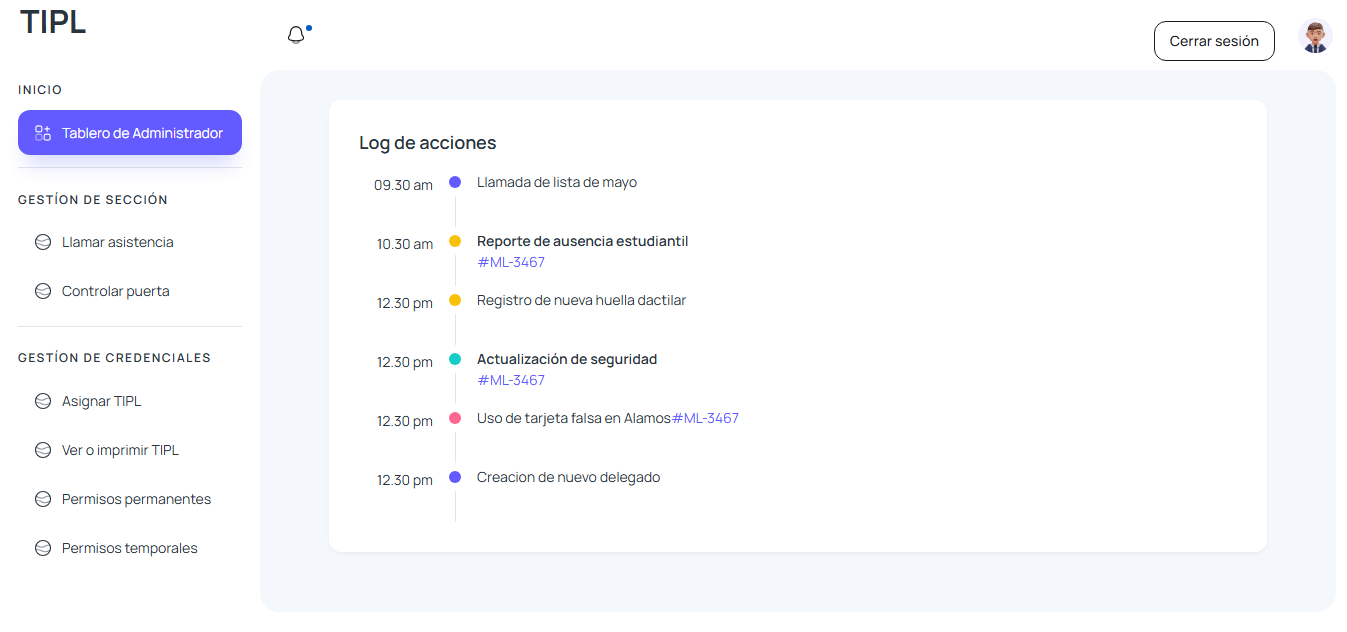
Admin dashboard with real-time audited action log
Admin dashboard - real-time audited action log
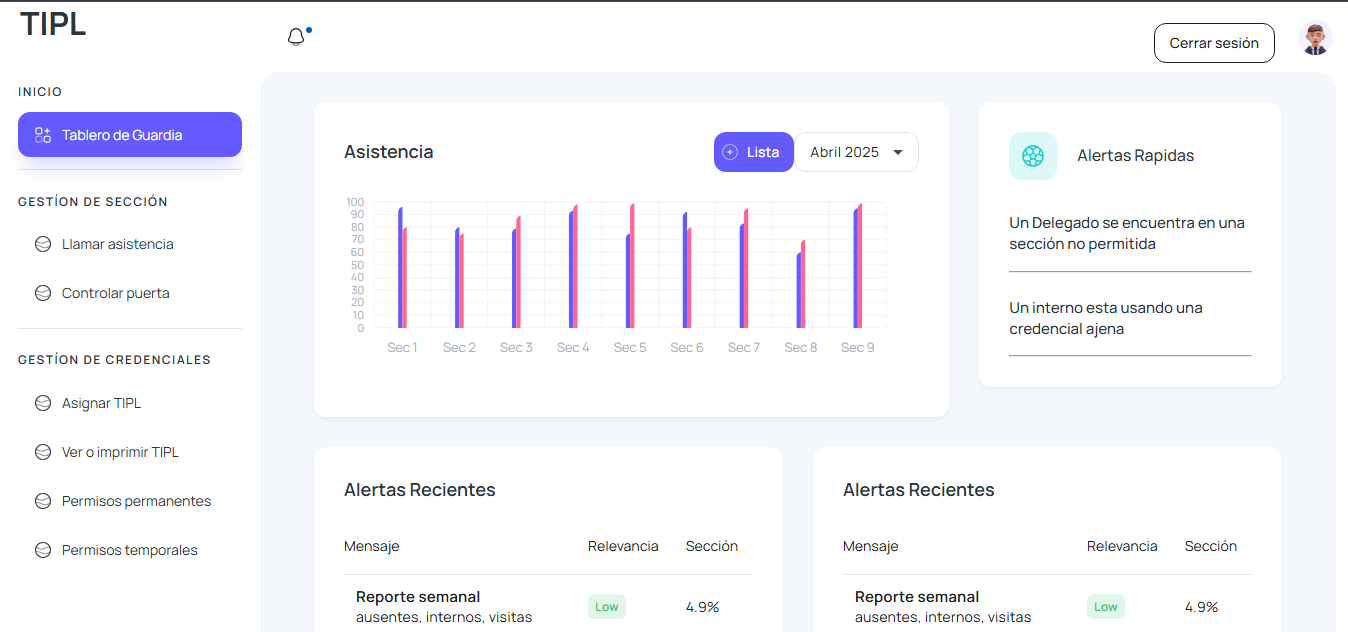
Guard dashboard with attendance by section and real-time alerts
Guard dashboard - attendance by section and real-time alerts
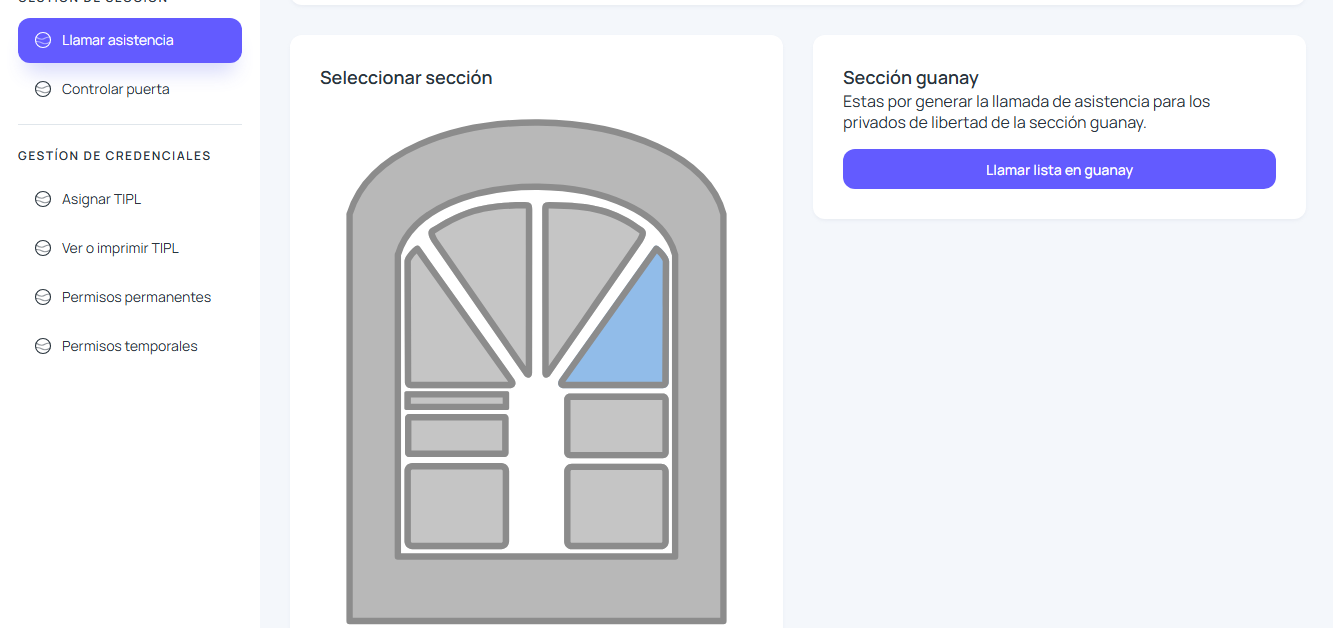
Section selection interface with facility floor plan control
Section selection - facility floor plan control interface
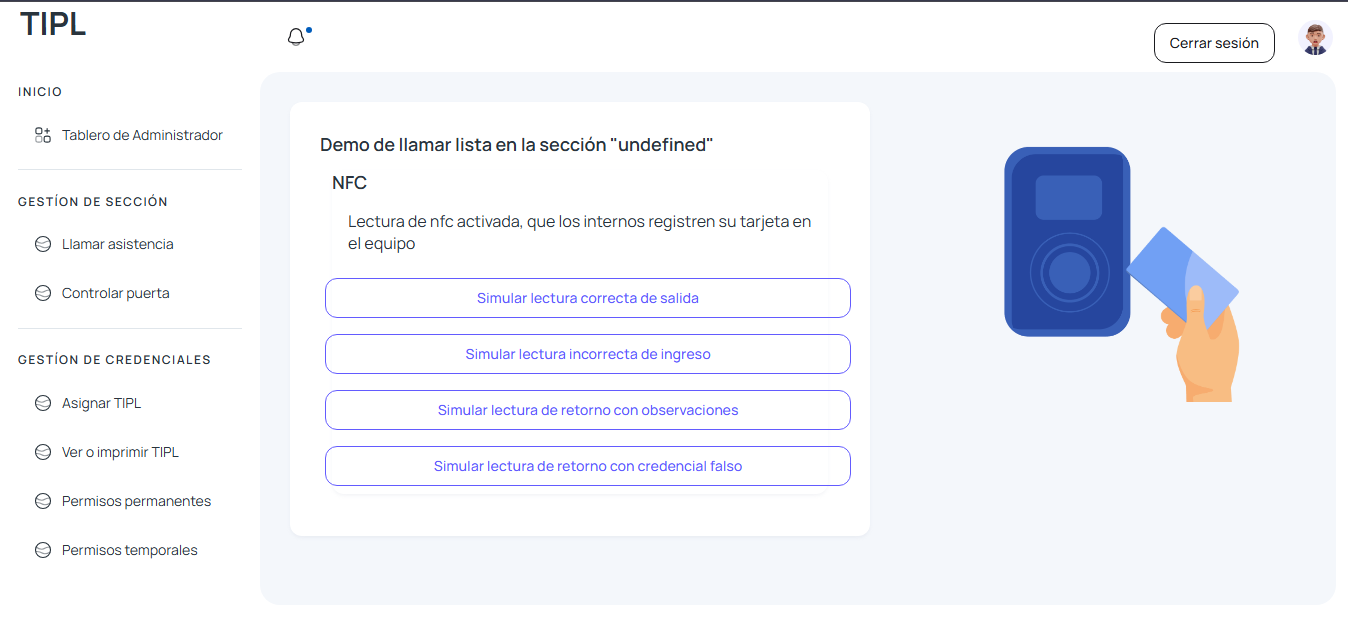
Roll call screen with NFC read validation
Roll call - NFC read validation per section
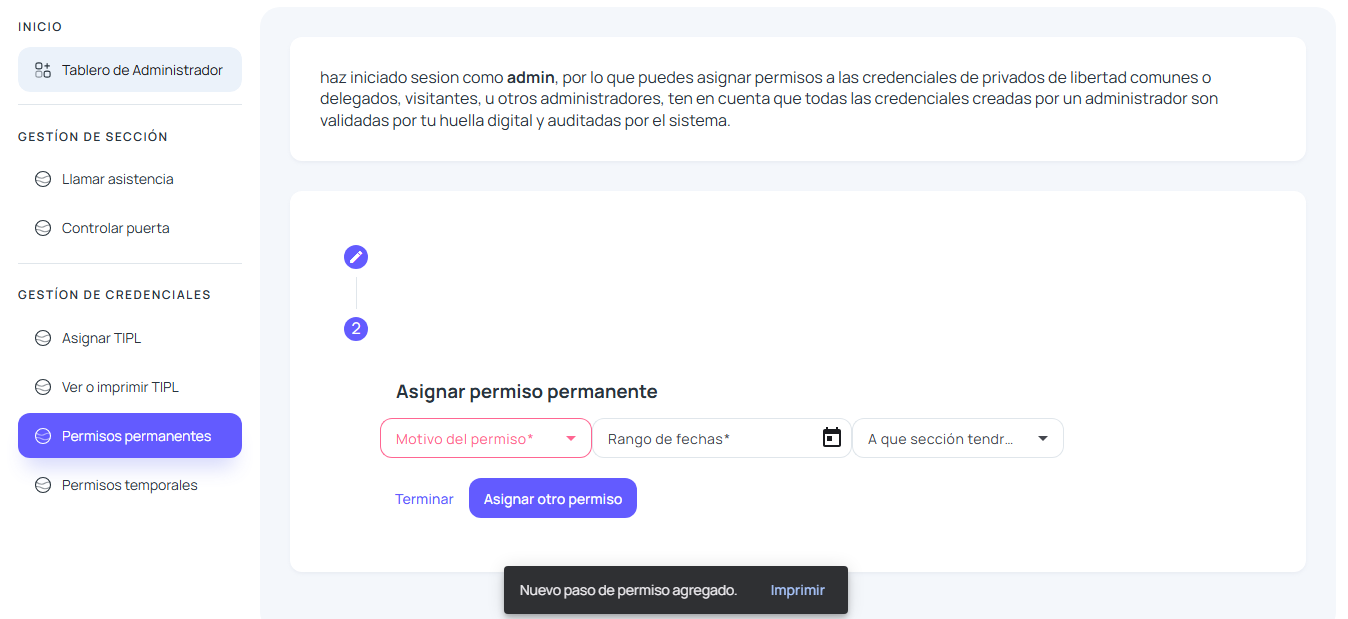
Permanent NFC-linked permissions management
Permanent permissions - NFC-linked
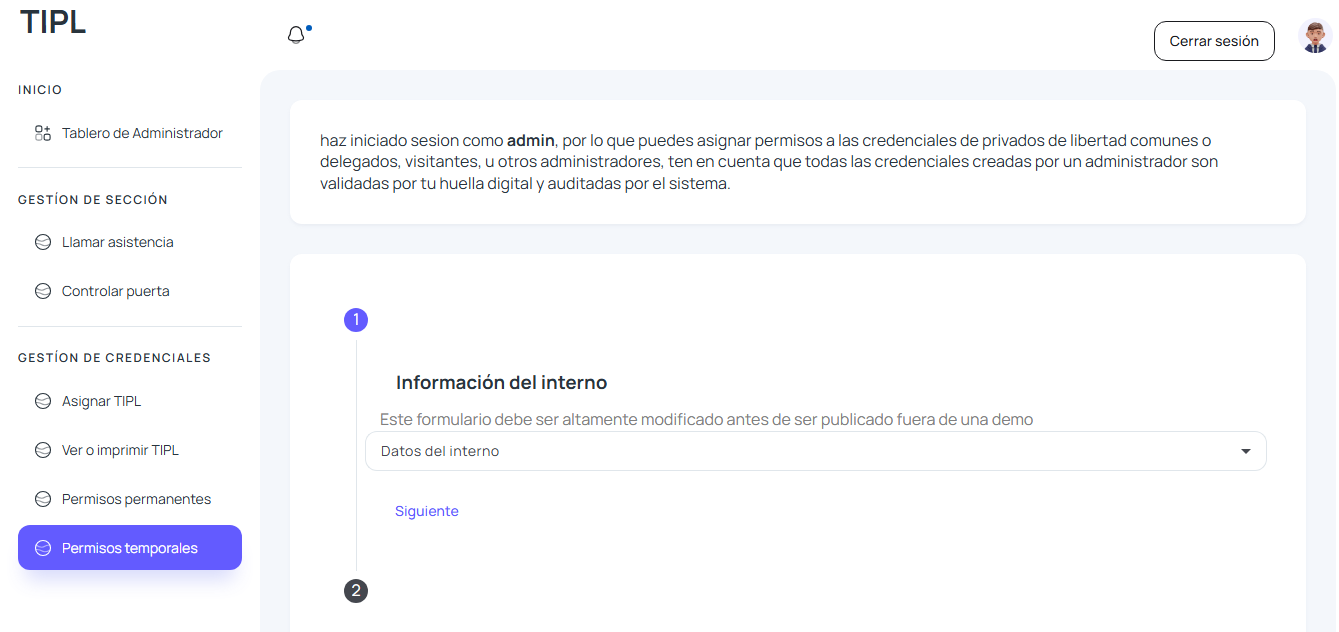
Temporary single-use QR permissions management
Temporary permissions - single-use QR
05 - Design decisions

The solution wasn't purely technical.

Integrating biometrics and NFC solved the verification friction. The decisions that truly sustained the solution were about power, roles, and social structure inside the facility.

NFCPermanent · 1 year

Operational mobility

For delegates, sub-delegates, and inmates with study or work permits inside and outside the facility. Directly linked to the credential's NFC chip.

QRTemporary · Single use

Purpose-defined visits

Court, medical consultation, or family visit. The QR is printed for the exit record; not required for facility re-entry.

Identity

All credentials are validated by the creator's fingerprint and audited by the system. They can only be created from high-control sections of the facility.

Audit

Logs are signed for traceability and are immutable by any role. Permissions can only be created or revoked - never retroactively edited. Every creation notifies higher-ranking users.

Roles

A corrections officer cannot create credentials for delegates - only the administrator can - to prevent influence trafficking within the population. The delegate is elected by vote on an extended term.

06 - Outcome
Before60 min
Projected15 min

Projection jointly validated with the facility's technical team based on the redesigned flow. Not a production implementation measurement.

07 - Why this case matters

Designing in an environment where research cannot be a form.

This project demonstrates something few portfolio cases can show: the most design-relevant information - the facility's actual social structure - only emerges from open conversation and earning the trust of the right people. No structured protocol would have captured that.

The design decision that truly sustained the solution wasn't NFC technology. It was recognizing that a prison is not governed by formal procedure alone, but by a parallel social structure that any control system must acknowledge to be effective - and that ignoring it doesn't produce neutral, it produces failure.

Key takeaway

Working in high institutional-sensitivity contexts requires holding two disciplines simultaneously: the rigor of UX research and a constant ethical judgment about what information is relevant to design and what should not be documented outside the institutional context.